

Stop waiting. The diaspora should move first.
How the Diaspora could drive African Reconstruction

Every year, the African diaspora sends home a sum of money that ought to embarrass everyone who still speaks of the continent as a place that needs saving. The figure is now closing on a hundred billion dollars a year, climbing at roughly ten per cent annually, and it is already about twice what the continent receives in official aid from every government and agency in the world combined. The entire architecture of international development — the agencies, the country offices, the conditionalities, the conferences in Geneva, the consultants in business class — moves less money into Africa than ordinary Africans abroad move themselves, quietly, through their phones, on a Sunday afternoon, to their mothers.
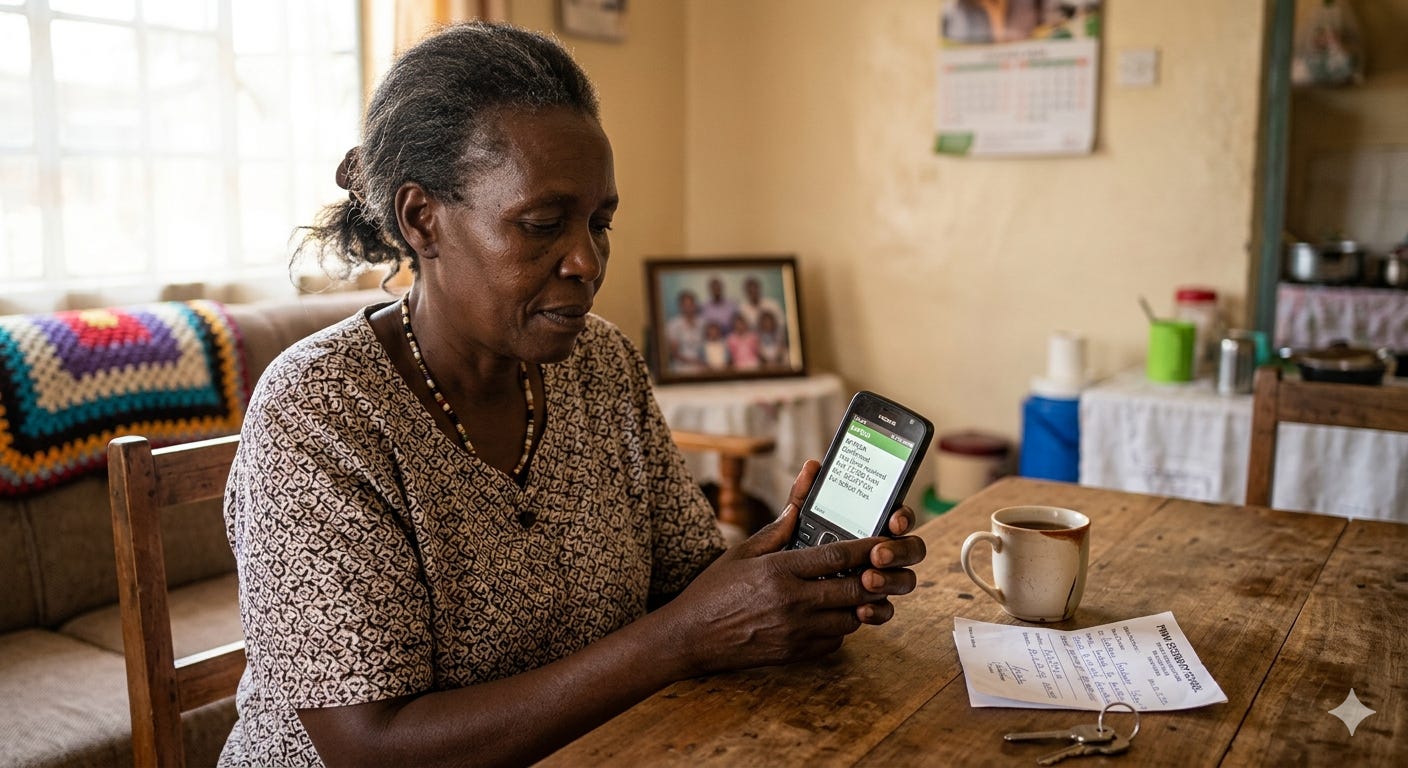
I want to honour that money before I say the harder thing about it. Those remittances pay school fees, settle hospital bills, put roofs on houses, and carry small businesses through bad seasons. They are not trivial, and they are not going away. But if we let the remittance figure define the diaspora, we will have made, against our own people, the very mistake the world has spent five centuries making against Africa. We will have looked at something enormously valuable and seen only the raw flow. We will have counted the cashew and missed the orchard.
Here is what I mean, and it is the centre of this essay.
I have been writing in this newsletter about what I call the African Reconstruction — the proposition that Africa is not a place to be developed toward someone else’s finish line, but a place that has to build, deliberately and on its own terms, the social, political and economic infrastructure that lets it reposition itself in a world that is, right now, visibly reorganising. The old certainties are loosening; trade routes are being redrawn, alliances rearranged, and the development industry itself is in open crisis about whether its model ever worked. That kind of opening does not come often, and it does not wait. The diaspora has a genuine and outsized role to play in seizing it — and yet the diaspora’s role keeps getting stuck on a single, circular, paralysing question.
The question is one of sequence. Does the diaspora move first — organising itself, pooling its capital, building its institutions — or does it wait for African governments to create the policy environment that makes all of that safe and easy? Put the question that way, and you can feel the trap closing, because each side is reasonable and each side is waiting for the other. The diaspora says, understandably, give us the frameworks, the protections, the diaspora-bond legislation, and then we will commit.” The policymakers say, understandably, show us serious diaspora capital organising itself, and then we will build the frameworks around it. And so everybody lands exactly where they started, the hundred billion keeps arriving one household at a time, and the repositioning that the moment makes possible quietly does not happen.
I want to argue, plainly, for breaking the deadlock from one side. The diaspora should move first.
It should move first because waiting for policy to lead has never been how anything consequential in Africa actually got built. Consider mobile money. If the pioneers of M-Pesa had waited for a mature regulatory framework for branchless banking before launching, there would have been no M-Pesa, because the framework did not exist and could not have existed — you cannot regulate something the world has not yet seen. They built it first. They let a few million Kenyans demonstrate, through their own daily transactions, that the thing worked, was wanted, and was not going away. And then the regulation came, running hard to catch up with a reality that ordinary people had already created and that no policymaker could now afford to ignore. That is the sequence. Reality first, made by the people closest to the need; policy second, arriving to organise what the people have already proven. Safaricom did not wait for permission to become Safaricom, and the diaspora should not wait for permission to become what it could be.
So let me say concretely what moving first looks like, because the diaspora is not one undifferentiated mass — it is several million people already gathered into thousands of associations, hometown unions, professional networks, alumni groups, church and mosque communities, county and clan and national bodies. The organising infrastructure already exists. What it has not yet done is turn itself to building. It can.
Patient Capital
It can build the investment vehicles itself — and I want to be concrete about this rather than wave at the abstraction of “diaspora venture funds.”
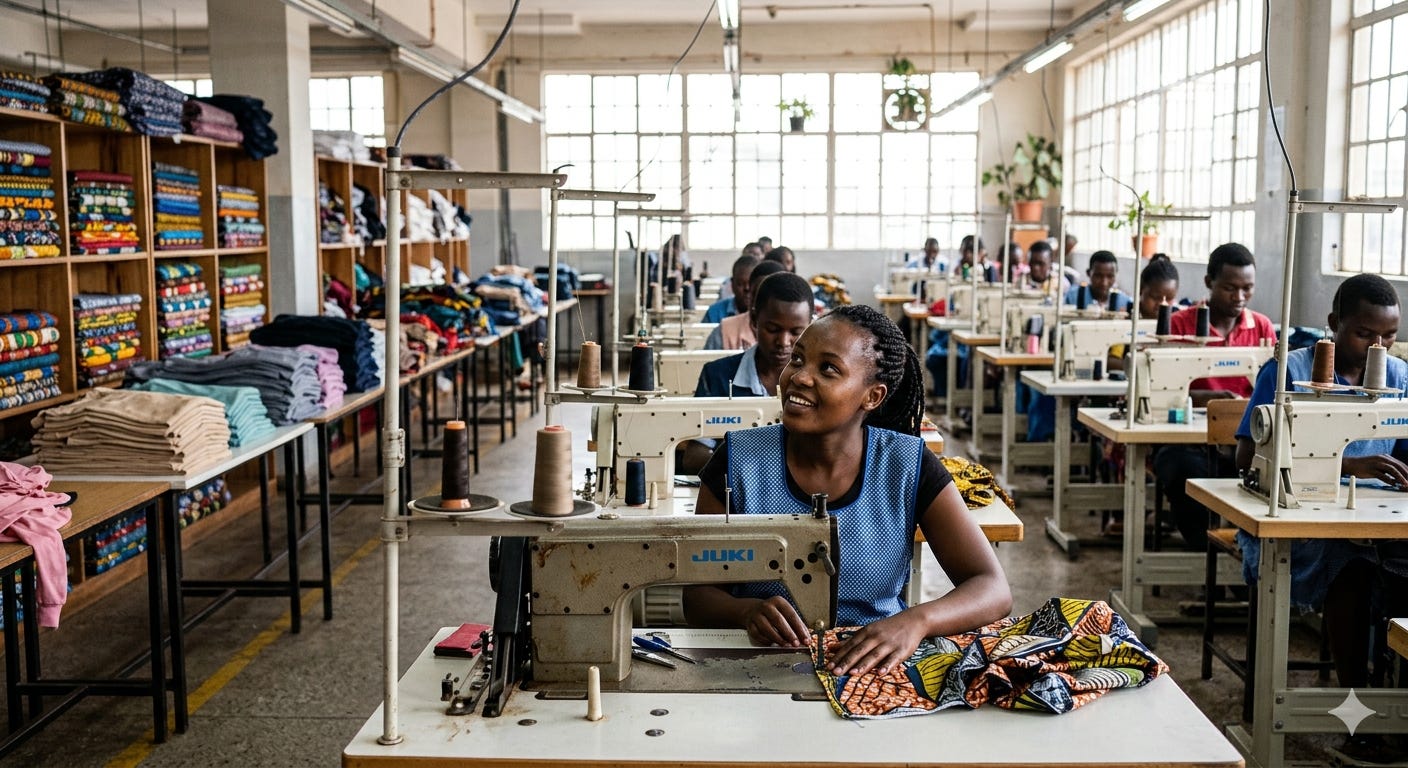
I recently discovered a small Kenyan venture that, for me, shows exactly what is at stake. It is called Nualocal. It began modestly, as an online shop selling Made-in-Kenya goods — olive-wood bowls, hand-carved jewellery, shirts — and it sold its first couple of hundred shirts organically, through nothing but search, shipping to Kenyans at home and abroad.
Then the small factory that made those shirts collapsed, and the founders found themselves taking WhatsApp messages from customers asking for a product that no longer existed. They could have waited — for a textile-sector incentive, for a development programme, for an investor. Instead, they decided to build the factory themselves, and the way they chose to finance it is the whole argument of this essay in miniature.
“No government,” in their own words, “no foreigners, just us.”
Kenyans with an idle industrial sewing machine can lease it to the factory at a monthly rate, with a buy-back after a year. Kenyans with some savings being quietly eaten by inflation can become Founding Partners, putting in operating capital — for local-mill fabric, for wages, for rent — and sharing the profit and the loss, quarterly, fifty-fifty. The garments themselves are sewn by Kenyan youth, who are paid per piece and learn a trade.
It is value addition rather than raw export, ownership spread across a crowd rather than concentrated in one pair of hands, a single shared factory instead of a thousand struggling one-machine workshops. It is, almost line for line, the African way of building that I have been describing in this newsletter.
And it has a ceiling. The leasing model is ingenious precisely because it mobilises idle machines rather than scarce cash, but the number of idle industrial sewing machines in Kenyan homes is finite, and the operating capital that domestic partners can inject is bounded by Kenyan incomes under inflationary pressure.
Nualocal can grow to a certain size on domestic distributed capital and then it will press hard against that ceiling — at which point its only conventional options are the two it has explicitly refused, the government cheque or the foreign investor who wants control.
This is the precise gap diaspora capital is shaped to fill, and to fill without violating anything Nualocal stands for — because a Kenyan in Manchester or Minneapolis is not a foreign investor. A Kenyan abroad buying a Founding Partner stake is the Kenyan nation, in its dispersed form, owning its own factory.
Picture a Kenyan nurses’ association in the United Kingdom — and there are thousands of Kenyan nurses in the NHS — deciding together to take up a block of Founding Partner units; that is the same money that would have gone home as remittance, redirected into a productive asset that carries ownership, a quarterly statement, and a return that compounds.
Picture a diaspora fund that does not have an idle machine in Nairobi but buys industrial sewing machines outright and leases them to Nualocal on the terms the founders have already designed and proven.
And then picture the second-order effect, which is larger than the capital — the diaspora that owns a piece of Nualocal becomes its market, its distribution network in London, Toronto, and Atlanta, the diaspora-resident shelf space for branded African goods that the reconstruction has been reaching for all along. One organised constituency, supplying at once the patient capital, the equipment, and the export market — the three things a young African manufacturer struggles hardest to find.
Nobody needs to grant permission for a diaspora association to become an investment collective. It needs only to decide to.
Knowledge Collaboratives
It can build the knowledge collaboratives itself. An African who has spent fifteen years as a clinician in Toronto, an engineer in Rotterdam, a regulator in Washington, a researcher in Manchester, has been doing more than earning a salary — they have been standing inside systems that work, learning how a functioning hospital is run, how a real research university generates research, how an institution is governed when governance is taken seriously. That knowledge does not require relocation to be useful. Diaspora professionals can organise themselves into standing collaboratives that work directly alongside the intellectuals and the builders at home, not as visiting experts flown in for a workshop, but as a permanent, structured partnership between the Africans who left and the Africans who stayed. A diaspora supply-chain manager giving two hours a month to help a venture like Nualocal design its production flow is worth more than most consultancy reports, and costs nothing but the will to organise it.
Diaspora Philanthropy
And the successful ones can build the philanthropic institutions themselves — and point them at the people, reconstruction actually depends on. I mean the rural innovator who has rigged a rudimentary system to generate electricity for her community and needs backing to make it more than rudimentary. I mean the fashion designer in Brazzaville boldly building a local brand against the assumption that style must be imported. I mean the women’s group investing in food processing, branding what they produce, and finding a market for those processed, branded goods on the shelves of the very countries the diaspora lives in. Diaspora philanthropy can be patient where institutional aid cannot, can tolerate the risk of the unproven innovator, can fund the slow restructuring of practice and the rebuilding of belief that no grant cycle is built to reach. That is culture-shaping work, and it does not wait on anyone’s policy.
There is a discipline to all of this, and it has to be said plainly, because diaspora capital can also do harm if it arrives badly. If it comes in large, impatient blocks demanding control, it would break the distributed ownership that is the whole point — a Nualocal rescued by one big diaspora cheque, on terms that hand one person the factory, would no longer be the thing worth backing. The diaspora has to enter in the same form as the domestic crowd it joins: many partners holding modest stakes, on the founders’ own published terms, accepting the patient horizon and the shared profit and loss. The diaspora must come in the African distributed way, as one more set of many hands, not as a concentrated foreign-style investor who merely happens to hold an African passport.

So let me state the argument without softening it.
The diaspora should stop waiting for the environment to be made hospitable before it acts, because that environment has never, anywhere, been built in advance of the people who forced it into being. The instruments already exist — Nualocal designed its own, and it is one small venture among thousands of Africans improvising the architecture of distributed ownership in real time. Let the diaspora organise itself through the thousands of institutions it already has. Let it lease the machines, buy the Founding Partner stakes, and build the knowledge collaboratives and the philanthropies. Let it create, on the ground and in the open, a new African reality — and let policy do what policy has always actually done, which is to arrive afterwards and catch up with what the people have already made true.
Reconstruction will not be handed down. It will be built up — and the diaspora, with its capital, its knowledge, and its hard-won institutional skill, is not waiting at the edge of that work. It is one of the few forces with everything required to begin it now.